
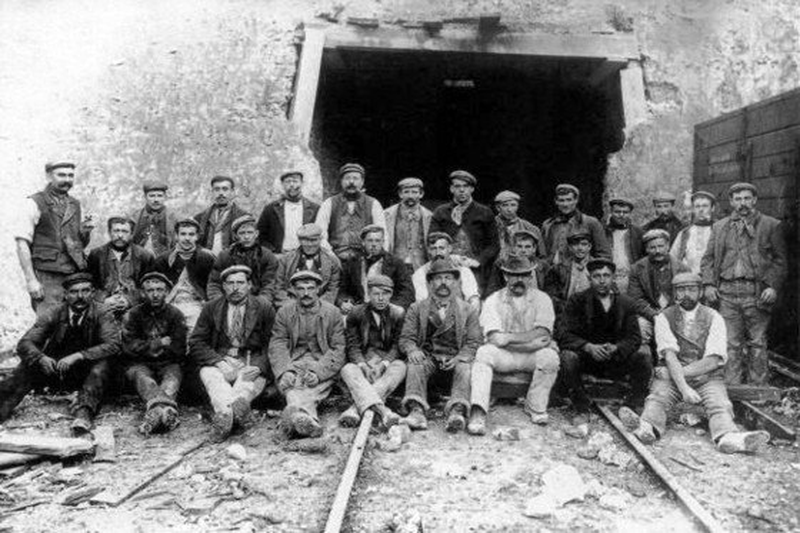
The mammoth task of constructing the Marylebone to High Wycombe main railway line began in the late 1890’s and the direct link to Marylebone was opened a few years later on 2nd April 1906. Although some earth moving machinery was available, construction of the many major earthworks along the route was often undertaken by hand using just picks and shovels. This proved to be very dangerous for the workers and there were many fatal accidents. One of the worst accidents occurred on 6th September 1902 during construction of the tunnel beneath White House Farm in Loudwater.
Download the full article by clicking on the button below. It will open in a new window. Close it to return to here.
Search Terms
The Whitehouse Tunnel Disaster
The mammoth task of constructing the Marylebone to High Wycombe main railway line began in the late 1890’s and the direct link to Marylebone was opened a few years later on 2nd April 1906.
Although some earth moving machinery was available, construction of the many major earthworks along the route was often undertaken by hand using just picks and shovels. This proved to be very dangerous for the workers and there were many fatal accidents.
One of the worst accidents occurred on 6th September 1902 during construction of the tunnel beneath White House Farm in Loudwater.
Navvies in front of the tunnel entrance
The tunnel was cut through by hand on 5th September and work commenced on widening during the night shift. At 1.30am the following morning the tunnel collapsed burying nine workers engaged on the widening at the centre. Six were killed and three were injured but able to be pulled clear.
The bodies of the ‘Railway Six’, as they became known, were taken to the nearby Mother Redcap public house (now a Romanian restaurant) where an inquest into the accident was held on 8th September. Five of the men were buried in Wycombe cemetery on 9th September and the sixth two days later. Huge numbers of people lined the route of the funeral procession from Loudwater to High Wycombe when a roadside collection was made ‘for the purpose of defraying the cost of the erection of a tombstone in memory of the men’.
Colleagues of the ‘Railway Six’ pay their respects
The monument to the ‘Railway Six’ was erected by
public subscription in High Wycombe cemetery and
the broken half column is symbolic of life cut short.
It was cleaned and repaired in 2010 by the
Council in time for a ceremony on the 108th
anniversary of the disaster.
If you walk above the railway tunnel near
White House Farm today you can still see
the large indentation in the ground at the
spot where the collapse took place.
Monument in Wycombe cemetery symbolising life cut short
Thanks to my History Group colleague Sally Scagell for providing this information.
Details of the names of the ‘Railway Six’ can be found at: https://www.galaxypix.com/Sally/Flackwellfolk/TheKeensstory.html