
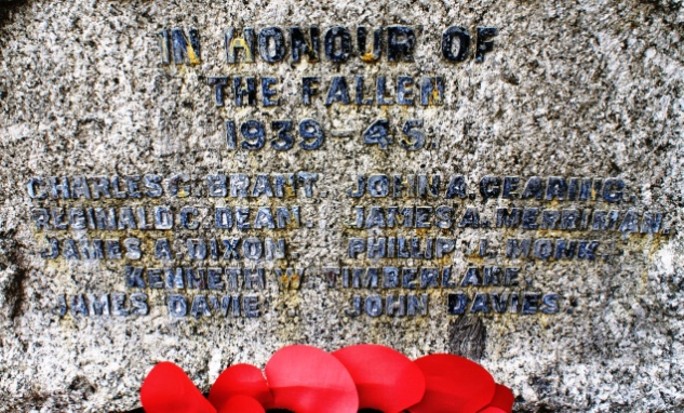
After the successful evacuation of over 338,000 troops from Dunkirk ended on 4th June 1940 it still left a further 140,000 military personnel stranded and awaiting rescue from the St. Nazaire area of France. A similar evacuation known as Operation Aerial was therefore planned to begin on 15th June and one of the soldiers awaiting rescue was Philip Monk who is listed as a WWII casualty on the Loudwater war memorial.
Download the full article by clicking on the button below. It will open in a new window. Close it to return to here.
Search Terms
OPERATION AERIAL AND A FORGOTTEN TRAGEDY
After the successful evacuation of over 338,000 troops from Dunkirk ended on 4th June 1940 it still left a further 140,000 military personnel stranded and awaiting rescue from the St. Nazaire area of France. A similar evacuation known as Operation Aerial was therefore planned to begin on 15th June and one of the soldiers awaiting rescue was Philip Monk who is listed as a WWII casualty on the Loudwater war memorial.
Philip was born in Essex on 30th December 1911, one of several children of parents Walter and Eva. The family later moved to 736 London Road, Loudwater and by 1939 Philip was employed as a bricklayer living in Whinneys Road. Philip enlisted in September 1939 and joined the Auxiliary Military Pioneer Corps in France. They were the backbone of the army tasked to build bridges, railways and roads, handle stores and ammunition and other essential work.
Loudwater War Memorial WWII casualties
The ships involved in Operation Aerial included the British Cunard liner RMS Lancastria, one of several passenger liners requisitioned by the British Government. The ships anchored north-west of the Loire estuary and embarkation began on 16th June. On 17th June 67,000 troops were still awaiting rescue and, although Lancastria was normally permitted to carry only 1,700 passengers, Captain Rudolph Sharp was ordered to cram on as many troops as possible and a small number of civilians. Over 6,700 passengers were known to be on board before further counting ceased due to the urgency to set sail so the final total is unknown.
Shortly after setting off without a destroyer escort, Lancastria was attacked by Junkers Ju88 Luftwaffe bombers and at 15.48pm received three direct hits, one of which entered the funnel and exploded in the engine room. Fifteen minutes later the ship had capsized and several of those still on board scrambled up to sit on the upturned hull where they were heard to be singing ‘roll out the barrel’. Five minutes later she sank and survivors in the water were strafed by German aircraft causing the oil leaked from the engine room to ignite.
The last moments of the Lancastria
Although the true number of casualties may never be known, Philip Monk aged 28 was one of the estimated over 6,000 who perished, the largest single loss of life in British maritime history. Despite this, after Operations Dynamo, Cycle and Aerial, over 558,000 military and civilian personnel had been safely evacuated to Britain.
Winston Churchill immediately ordered that news of the disaster be suppressed and it did not become public knowledge until a short article in the New York Times on 25th July 1940 which grossly underestimated the number of casualties. In the ensuing years the tragedy was largely forgotten and, despite several requests over the years and continued campaigning by relatives affected by the disaster, it was not until 2015 that the MOD finally announced that all known available documents had been released via the National Archives. The British Government declined to designate the site of the wreck as a war grave and their official detailed report of the disaster will not be released until 2040.
Monument at Clydebank unveiled in October 2011
Thanks are due to my colleague Ruth Bowler for her initial research on Philip Monk.
John Gurney, for and on behalf of Flackwell Local Area History Group.